Measured existing conditions, documented QA
Scan-to-BIM models built around your acceptance criteria
Convert suitable registered point clouds into Revit or IFC deliverables with the source, coordinates, element coverage, LOD or LOI, tolerance method and handover rules agreed before production.
Contracted through HMX-GLOBAL ENGG INC., a New York corporation. Remote delivery for AEC teams in the United States, United Kingdom, Europe, GCC, Canada and Australia.
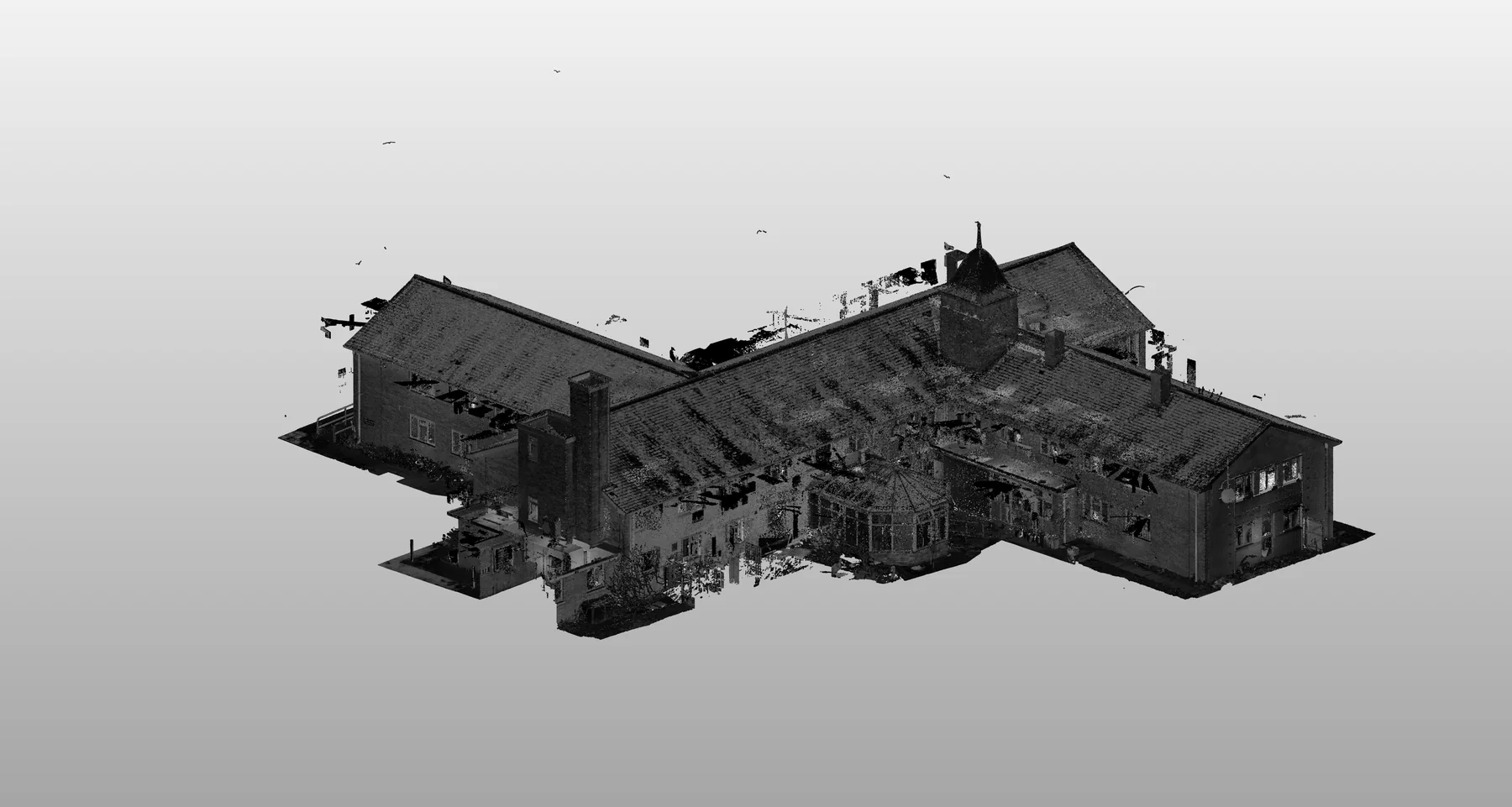 Source cloud
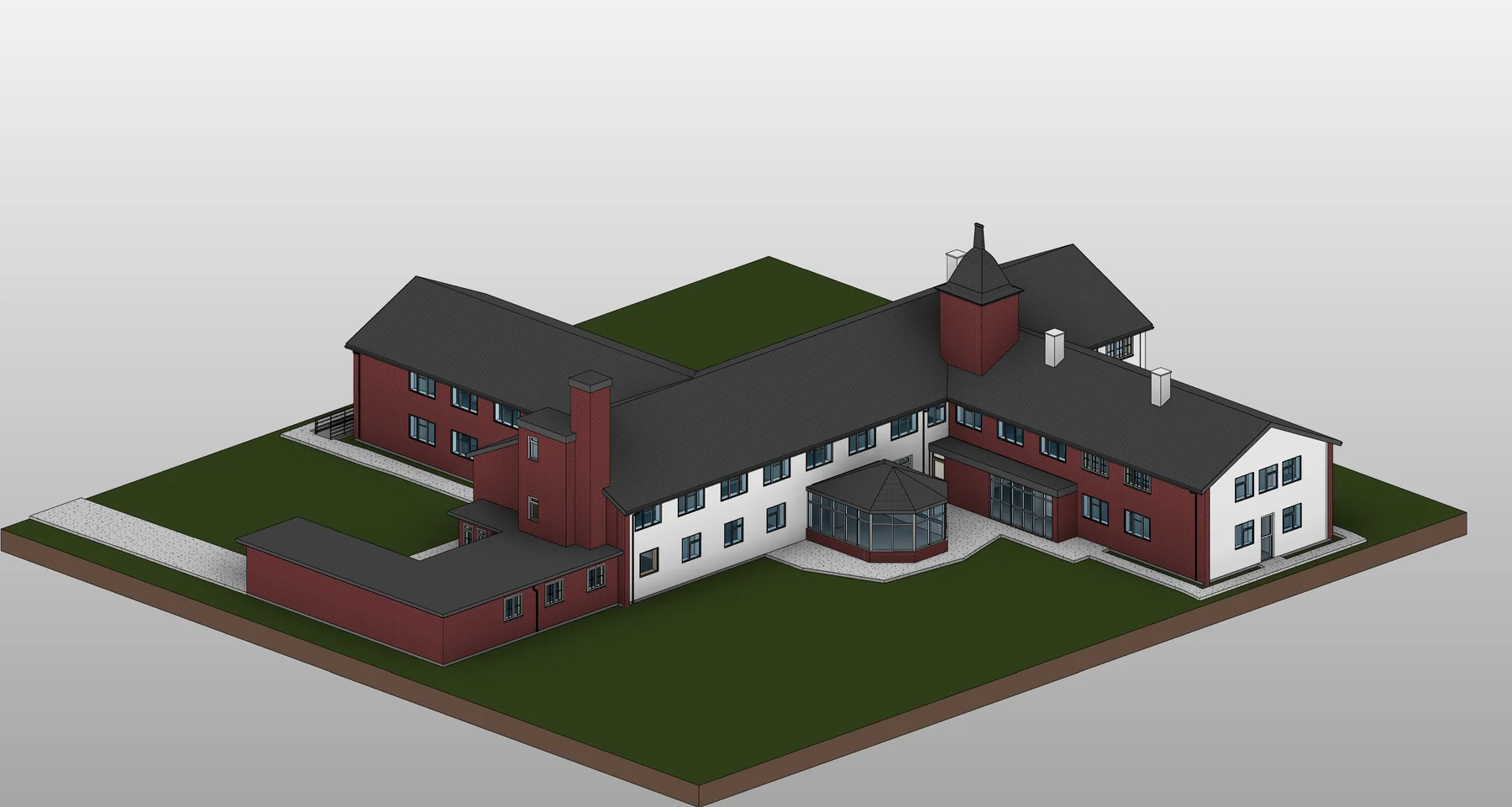 Processed model
Verified company identity
A real U.S. contracting entity—with the limits stated clearly
Scan to BIM Studios is an operating brand of HMX-GLOBAL ENGG INC., a New York domestic business corporation formed on 12 May 2026.
- Legal entity
- HMX-GLOBAL ENGG INC.
- New York DOS ID
- 7912860
- Registered address
- 35 Androvette Street, Staten Island, NY 10309
- Delivery model
- Remote international BIM production; meetings by appointment
What this does—and does not—prove
The registration verifies the company buyers contract with. It does not substitute for project QA, client references, insurance, professional licences or third-party ISO certification. Those items are supplied only when verified and applicable; the website will not manufacture trust signals.
Verify the legal identity and operating model, review the evidence tiers and historical project attribution, or start with a bounded pilot before a full appointment.
Featured proof
Inspect source-to-model project evidence
Compare real source scans with processed BIM views. Each page explains what is visible and where formal project records are still required.
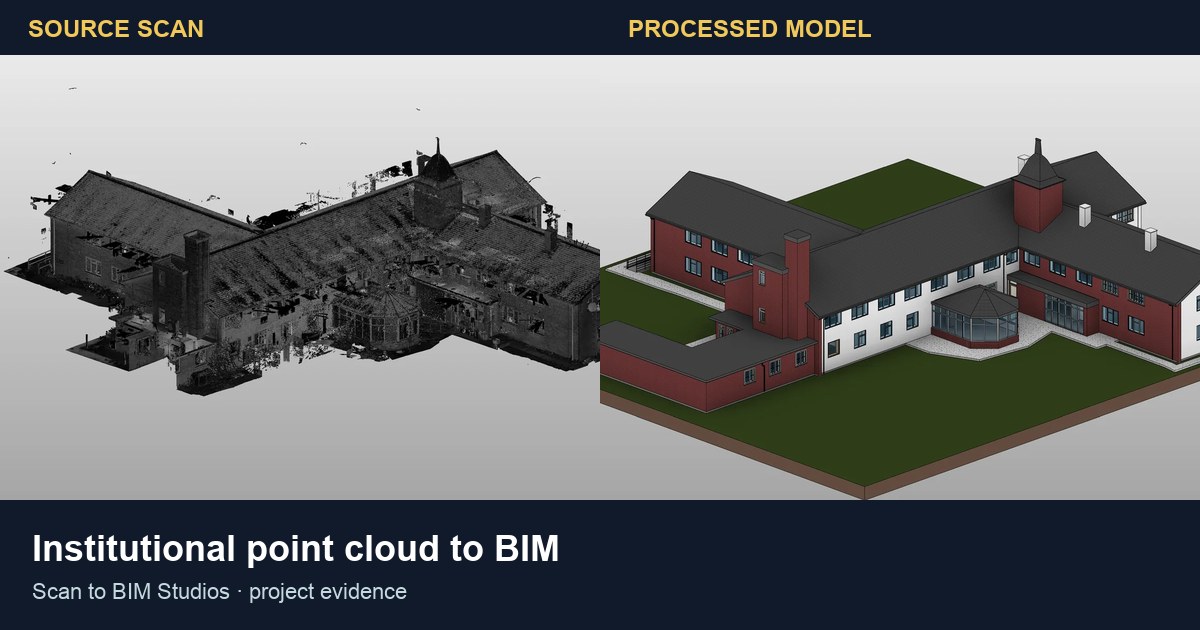
Existing conditions · institutional
Institutional Building Point Cloud to BIM
Compare source point-cloud views with the processed institutional BIM model across 3D, elevation, and floor-plan views, with honest evidence limitations.
Inspect the evidence →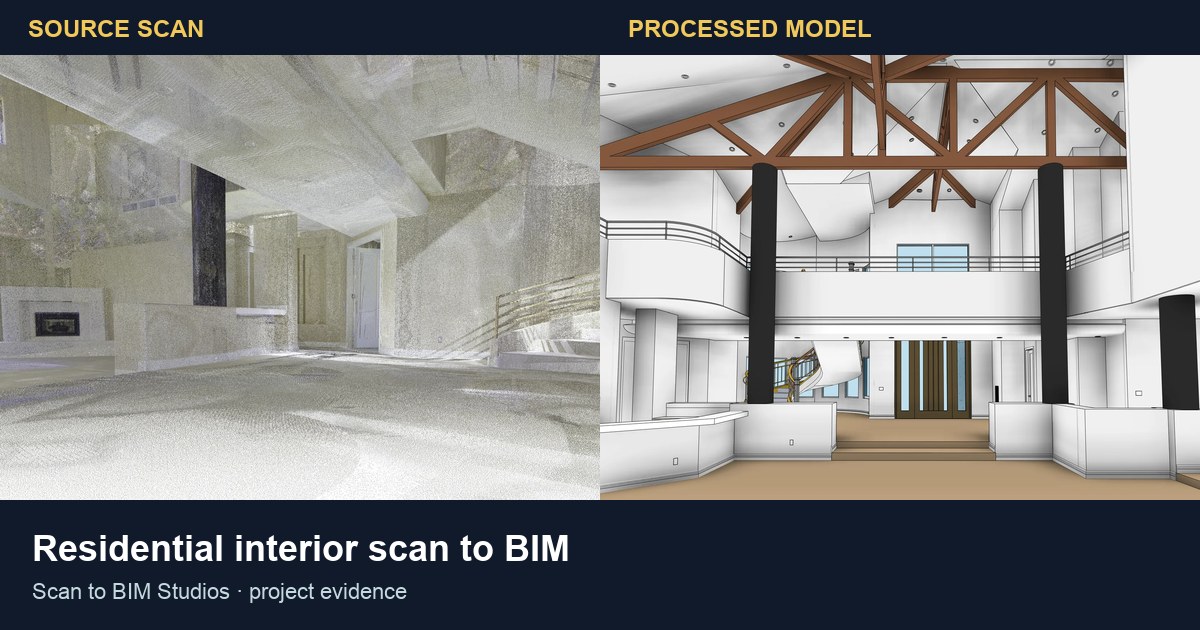
Existing conditions · residential interior
Residential Interior Scan to BIM
Inspect source interior point clouds beside processed BIM views for a residential living space, kitchen, and fireplace zone.
Inspect the evidence →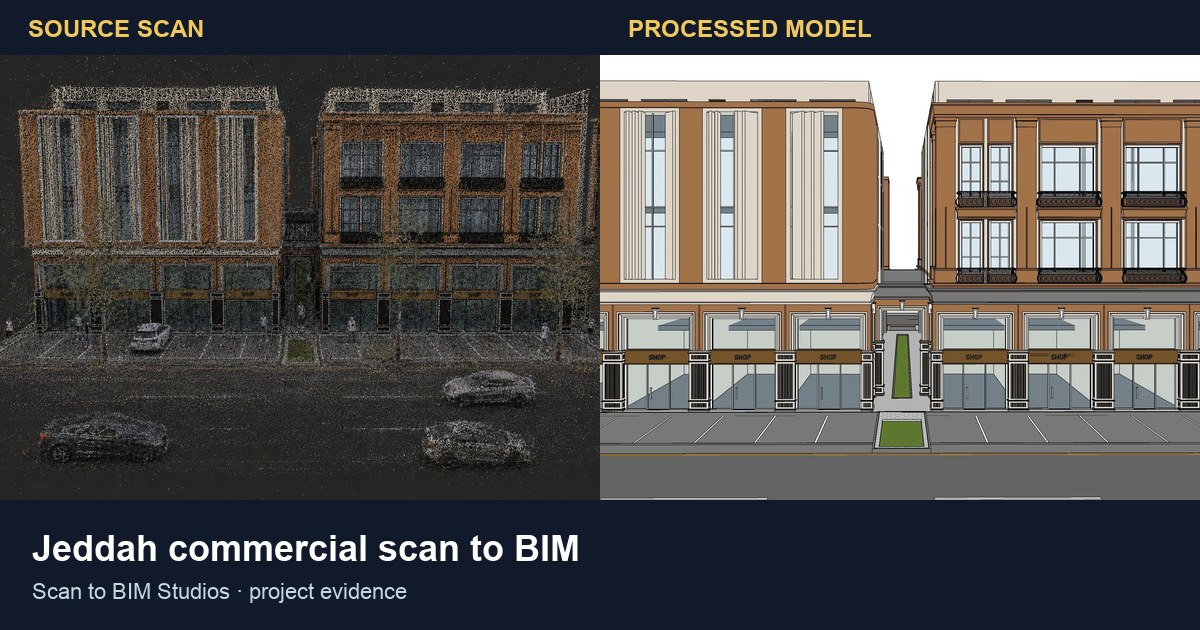
Existing conditions · commercial · Jeddah
Jeddah Commercial Scan to BIM
Compare façade point-cloud evidence with processed commercial BIM views from a Jeddah project dataset.
Inspect the evidence →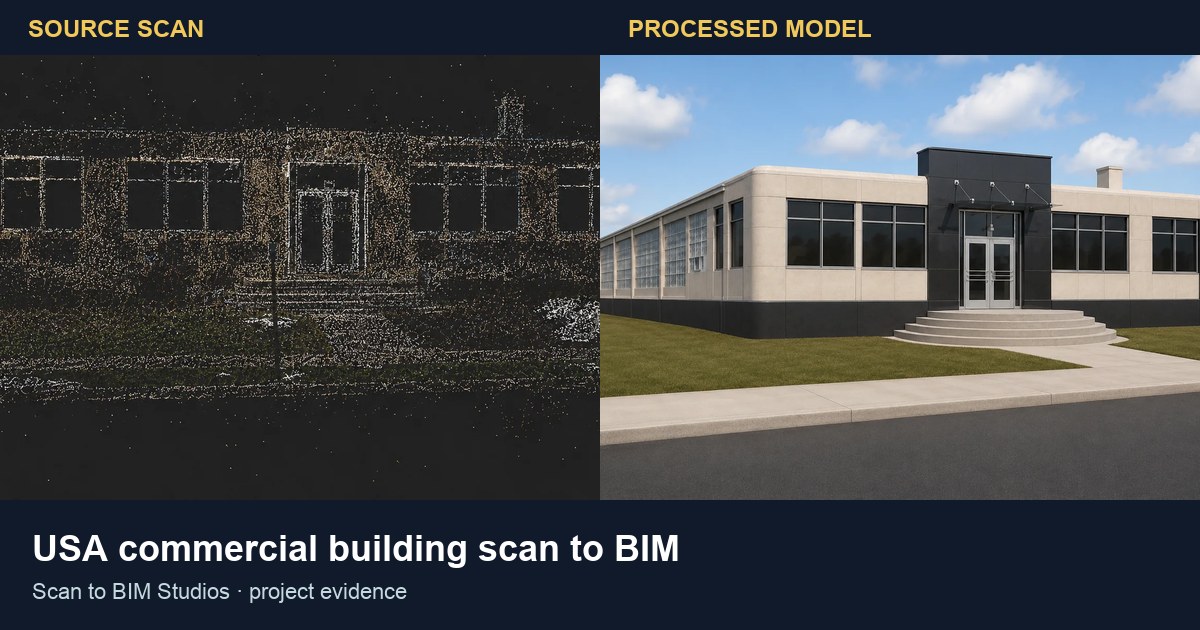
Existing conditions · commercial · United States
USA Commercial Building Scan to BIM
Review exterior point-cloud views and processed BIM model views for a low-rise U.S. commercial building.
Inspect the evidence →The acceptance layer
Do not just receive a model—know what passed
Our delivery method can define tolerances by element, verify coordinates, check completeness and record exceptions before handover. The result is a testable information product rather than an attractive file with a blanket accuracy claim.
Evidence a buyer can request
- LOD, LOI and tolerance matrix
- Coordinate and source statement
- Risk-based cloud-to-model checks
- Issue log and closure status
- Native and exchange receiver test
Choose your path
By role & sector
Choose the project decision first, then review the matching evidence and scope.
Services
What you can buy
Each card leads to a deliverable page — not another article index.
Reality capture
Scan-to-BIM
Registered cloud to as-built Revit/IFC with written tolerances.
Review service and deliverables →
Production
BIM modelling & coordination
Arch/struct/MEP packages, clash cycles, weekly federation.
See service stack →
Commercial
Published pricing bands
Indicative $/hr and Scan-to-BIM $/sq ft — then a matrix quote.
Get a scoped estimate →Method
QA buyers can actually use
- LOD / LOI matrix before modelling
- Pilot zone to lock standards
- Deviation checks on critical elements
- Issue logs with owners — not screenshot dumps
- CDE-ready handover folders
Procurement test
How to evaluate the studio before appointment
Inspect the source-to-model evidence, agree the scope matrix and acceptance method, then use a representative pilot where the project risk justifies one.
Quick answers
Scan-to-BIM services: common buyer questions
What does Scan to BIM Studios provide?
We provide Scan-to-BIM, point cloud to Revit modelling, measured as-built BIM, architectural, structural and MEP modelling, coordination, and selected infrastructure BIM support. Every appointment is scoped by inputs, model uses, element coverage, LOD/LOI, accuracy criteria, file formats and acceptance evidence.
Which point-cloud and BIM file formats can you use?
Common point-cloud inputs include E57, RCP/RCS, LAS/LAZ and PTX/PTS. Depending on the agreed workflow, outputs can include RVT, IFC, DWG, NWC/NWD, schedules and a QA note. Format support is confirmed during intake because coordinates, registration quality and software release matter as much as the extension.
How accurate are Scan-to-BIM models?
There is no honest universal accuracy number. Tolerance is agreed by element class and intended use, then checked against suitable source data. A ±5–15 mm band may be feasible for selected architectural or structural elements when capture and registration support it, but hidden, reflective, moving or poorly scanned elements need separate treatment.
Where are your BIM services delivered?
Projects are contracted through HMX-GLOBAL ENGG INC., a New York corporation, and delivered remotely for AEC teams in the United States, United Kingdom, Europe, GCC, Canada and Australia. The Staten Island address is the registered and service-of-process address; it is not presented as a staffed walk-in production office.
How is Scan-to-BIM cost calculated?
Cost depends on area, disciplines, point-cloud condition, repetition, LOD/LOI, model-use risk, required accuracy, schedule and QA evidence. Review the Scan-to-BIM cost guide and published pricing bands, then request a matrix-based quote for the actual inputs.
Ready to scope a package?
Send a cloud sample or drawing set. We review the inputs and return a scoped quote path once the information needed to price the work is complete.